
Masks
Guatemalan and Mexican Masks
By putting on another face, the mask wearer magically enters an altered state.
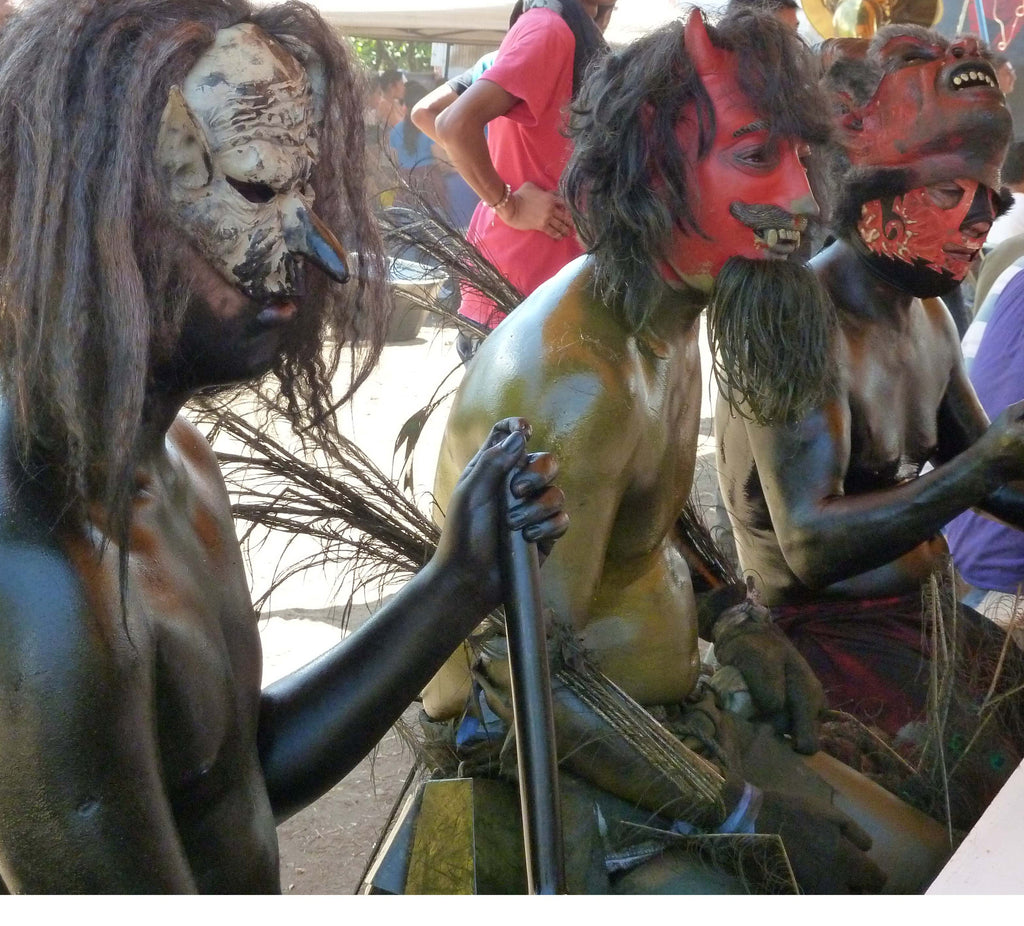
Today in Guatemala and Mexico, many indigenous groups use masks in the performance of dances and pageants. The exact meanings of these ceremonies may be long forgotten, but they typically enact a mythical story intended to bring fertility, yield a good harvest or scare away evil spirits. Some of these dances are rooted in traditions brought from Spain - these are usually the religious celebrations. Then there are the dances rooted in Mayan tradition where animal masks are often used in dances like "Toritos" (the Little Bulls), or "El Venado" (the Deer).
This collection of Guatemalan and Mexican masks comes from mostly indigenous villages. Many have been used in various dances. The masked dances, which often include costumes, are an enactment of religious and mythological themes. These themes originated in the Pre-Hispanic past when masks were buried with the dead, which suggests they had a transformational function and meaning. Today, battles between good and evil taken from myths or religious stories, as well as scenes from everyday life are played out in carnivals and celebrations.
Some of the most well known dances are those re-enacting the conquest with masks representing conquistadores such as Cortez or Alvarado and religious stories with saints and devils. There are also masks made for specific dances like "el baile de los viejitos," dance of the old men. And then there is the "baile de los Tecuanes," or dance of the wild beasts, where dancers wear masks of wild animals like jaguars or tigers.